


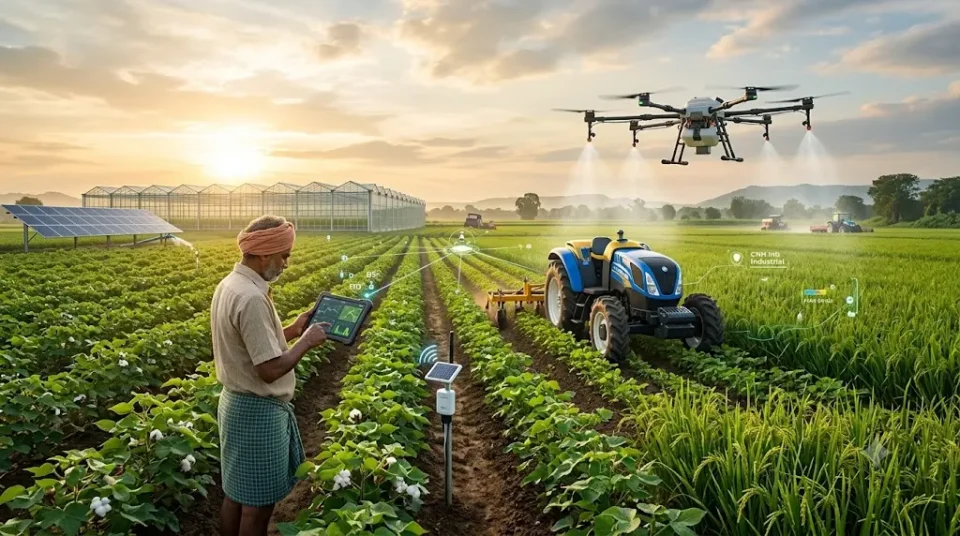
Agriculture has always evolved alongside human innovation. From simple hand tools to tractors, irrigation systems, and large-scale machinery, each technological shift has helped farmers work more efficiently and produce more food. Today, agriculture is entering another major period of change. Digital tools, artificial intelligence, automation, sensors, drones, and data-driven systems are transforming how farmers make decisions, manage resources, and respond to challenges.
This transformation is not only about replacing traditional farming methods. It is about improving them. Modern agricultural technology helps farmers understand their fields more precisely, reduce waste, increase productivity, and adapt to changing weather conditions. As farming becomes more complex, technology is giving farmers better control over everyday operations.
Precision Farming Is Changing Decision-Making
One of the most important developments in modern agriculture is precision farming.
Traditional farming often relies on broad decisions applied across an entire field. Precision agriculture takes a more detailed approach by using data to understand differences in soil, moisture, crop health, and nutrient levels.
For example, sensors can help farmers identify which parts of a field need more water and which areas already have sufficient moisture. Instead of irrigating the entire field equally, farmers can direct water where it is needed most.
The same approach can be used for fertilizers and pesticides.
By applying resources more precisely, farmers can reduce unnecessary costs while also limiting environmental impact. This makes farming more efficient and more sustainable at the same time.
Drones Are Becoming Valuable Farming Tools
Drones are increasingly being used for agricultural monitoring.
A drone can capture high-resolution images of large areas in a relatively short time. Farmers can use those images to identify changes in crop color, plant growth, irrigation problems, or early signs of disease.
This allows potential issues to be detected sooner.
Instead of walking through an entire field and checking crops manually, a farmer can review aerial images and focus attention on specific areas that appear unhealthy.
Drones can also support mapping, crop spraying, and field inspection.
Although the technology may seem advanced, its practical value is simple: it helps farmers see more of their land in less time.
Artificial Intelligence Is Supporting Smarter Farming
Artificial intelligence is becoming more common across many industries, and agriculture is no exception.
AI systems can analyze large amounts of agricultural data and identify patterns that may be difficult for people to notice manually.
For instance, AI can help analyze weather forecasts, soil conditions, historical crop performance, and pest activity. Based on this information, farmers may be able to make better decisions about planting schedules, irrigation, crop protection, and harvesting.
Some systems can even help identify plant diseases from images.
A farmer can take a photo of a crop showing unusual symptoms, and an AI-supported system may help identify possible causes.
This does not replace agricultural expertise, but it can provide another useful source of information.
Digital Tools Are Improving Agricultural Education
Technology is also changing how farmers, agricultural experts, and organizations share knowledge. Online tutorials, training videos, and educational content can make complex farming techniques easier to understand, especially for people in remote areas. Content creators and agricultural educators can also use tools such as voiceover AI to add clear narration to instructional videos, explain new farming methods, or make educational materials more accessible to wider audiences.
This type of digital communication can help spread practical knowledge faster, whether the topic is crop management, equipment maintenance, sustainable practices, or pest prevention. As more agricultural information moves online, clear and engaging communication is becoming increasingly valuable.
Smart Irrigation Helps Conserve Water
Water management is one of the biggest challenges in agriculture.
In many regions, water shortages make efficient irrigation increasingly important. Traditional irrigation systems can sometimes use more water than necessary, especially when decisions are made without real-time information.
Smart irrigation systems can monitor soil moisture and weather conditions.
If the soil already contains enough moisture, irrigation can be delayed. If temperatures are high and the soil is dry, watering can be adjusted accordingly.
This reduces waste while helping crops receive more consistent care.
Over time, smarter irrigation can support both crop productivity and resource conservation.
Farm Automation Is Reducing Repetitive Work
Automation is another major trend shaping agriculture.
Modern farms may use automated systems for planting, feeding livestock, sorting produce, monitoring greenhouse conditions, or harvesting certain crops.
Robotic systems are also being developed for tasks such as weeding and fruit picking.
These technologies can be especially valuable when farms face labor shortages.
Automation can also improve consistency because machines can repeat specific tasks with a high level of precision.
However, human oversight remains important.
Farmers still need to understand their crops, equipment, weather conditions, and overall production goals. Technology is most effective when it supports skilled decision-making rather than replacing it.
Data Is Becoming a Major Agricultural Resource
Modern farming increasingly depends on data.
Farmers can collect information about crop yields, soil health, temperature, rainfall, machinery performance, livestock health, and many other factors.
When organized properly, this information can help reveal useful trends.
For example, a farmer may discover that one crop variety consistently performs better in a specific part of the farm. Another area may require different fertilizer levels because of soil conditions.
Data makes these differences easier to identify.
Over time, farmers can use this information to improve future planting decisions and reduce unnecessary expenses.
Technology Is Supporting Sustainable Agriculture
Sustainability has become an important priority in agriculture.
Farmers need to produce enough food while protecting soil, water, and other natural resources.
Technology can help achieve this balance.
Precision farming reduces excessive fertilizer use. Smart irrigation can limit water waste. Sensors can help monitor soil health. Drones can detect crop problems before they spread.
Technology can also support regenerative practices by helping farmers measure changes in soil quality and crop performance over time.
This makes sustainability more measurable.
Instead of relying only on assumptions, farmers can use real data to evaluate whether certain farming practices are working.
Technology Can Improve Livestock Management
Digital agriculture is not limited to crops.
Livestock farmers are also using technology to monitor animal health and behavior.
Wearable sensors can track movement, feeding patterns, body temperature, and other indicators.
If an animal becomes less active or shows unusual behavior, the system may alert the farmer.
Early detection can help farmers respond more quickly to potential health problems.
Automated feeding and milking systems can also reduce repetitive tasks while improving consistency.
These technologies allow livestock farmers to manage larger herds with better visibility into individual animals.
Challenges Still Remain
Despite the advantages, adopting agricultural technology is not always easy.
Cost is one of the biggest challenges.
Advanced machinery, sensors, drones, software, and automated systems can require significant investment.
Farmers may also need training to use new tools effectively.
Internet connectivity can be another problem, especially in rural areas where digital infrastructure may be limited.
Technology also requires maintenance.
A system is only useful if it works reliably during important farming periods.
For these reasons, farmers need to evaluate technology carefully and choose tools that solve specific problems rather than adopting technology simply because it is new.
Start With Practical Improvements
Farmers do not need to modernize everything at once.
A better approach is to identify one clear challenge.
For example, a farm that struggles with water use could begin with soil moisture monitoring. A farm dealing with crop diseases might benefit from better field monitoring. A livestock operation could start by introducing health-tracking systems.
Once the results are clear, additional technology can be introduced gradually.
This approach reduces risk and gives farmers time to understand which tools deliver the most value.
The Future of Farming Will Be More Connected
Agriculture is becoming increasingly connected.
Machines, sensors, software, weather systems, and farm management platforms can now work together to provide farmers with a more complete picture of their operations.
In the future, farmers may rely even more heavily on real-time data.
A single system could potentially monitor weather forecasts, soil conditions, irrigation needs, machinery performance, and crop health at the same time.
This level of integration could make farming more responsive.
Instead of reacting to problems after they appear, farmers may be able to predict and prevent many issues before they become serious.
Conclusion
Technology is transforming agriculture by making farming more precise, efficient, and informed. Tools such as drones, sensors, automation, artificial intelligence, and smart irrigation systems are helping farmers manage resources more effectively and respond to challenges faster.
However, successful agricultural technology is not about using the most advanced tools available. It is about choosing practical solutions that improve real farming operations. As technology continues to develop, the farmers who combine traditional agricultural knowledge with modern digital tools will be well positioned to improve productivity, reduce waste, and build more sustainable farming systems for the future.
